Blog
William Osman Shirt Designs Graphics and Collectibles
Feb
William Osman’s visual language sits at a strange but intentional intersection: real engineering discipline colliding with internet-grade chaos. His graphics resonate because they look like technical diagrams that escaped the lab and fell straight into meme culture. As “STEM-core” aesthetics trend across social platforms, fans increasingly use this kind of apparel to quietly signal niche humor, shared references, and a comfort with things going wrong on purpose.
The Aesthetic of “Chaotic Engineering” in Osman’s Graphics
The defining trait of William Osman’s design style is intentional messiness. Graphics often resemble MS Paint experiments, rough schematics, or half-serious instructional diagrams. Lines aren’t clean. Fonts feel improvised. Visual balance is frequently sacrificed for comedic timing. This chaotic tech aesthetic mirrors the tone of his content itself: engineering projects that are technically impressive but framed through absurdity. For fans, the appeal lies in authenticity. The graphics don’t look focus-tested or polished, which makes them feel closer to real maker spaces than traditional creator branding.
Decoding the Most Iconic William Osman Shirt Symbols
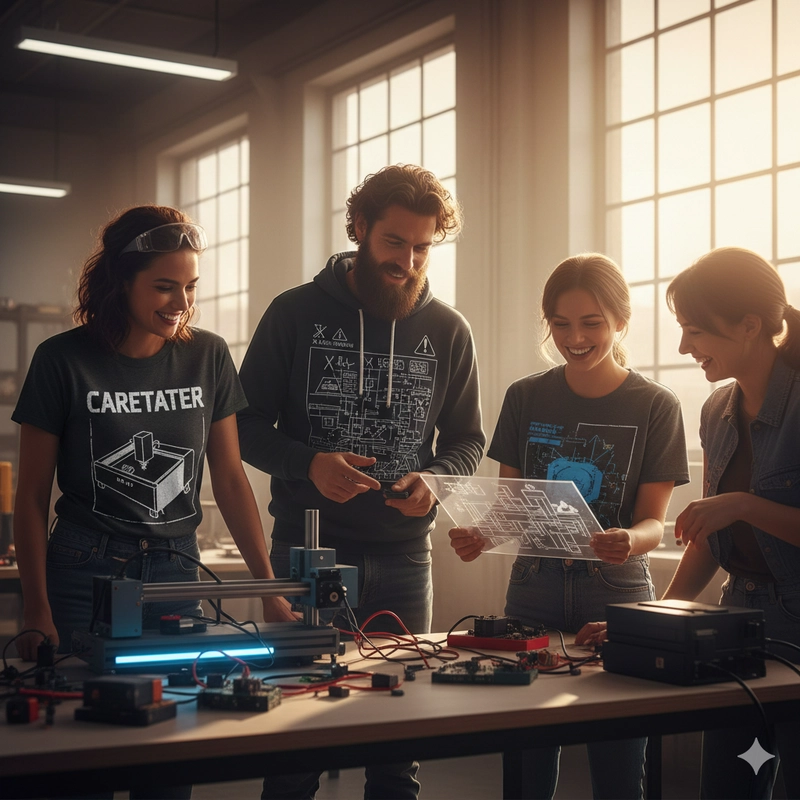
Recurring symbols play a big role in how these designs communicate meaning. X-rays reference transparency and seeing how things break internally. Laser cutters and CNC-style visuals nod to real tools used in maker culture. Warning labels—often exaggerated or intentionally ignored—poke fun at safety culture without dismissing the risks entirely. For those searching for William Osman shirt meanings, these elements work as visual shorthand. They say: experimentation is the point, failure is expected, and understanding comes from breaking things apart.
Why “The Caretaker” Remains a Community Staple
“The Caretaker” graphic stands out because it operates as deep lore. Fans familiar with the origin recognize it instantly, while outsiders see only a strange, vaguely ominous figure. That ambiguity is the appeal. Within the community, the Caretaker acts like a handshake. Wearing it signals long-term engagement rather than casual viewership. It rewards context and shared memory, which is why it continues to surface in fan photos and comment threads years after its introduction.
How Graphic Apparel Signals Identity in the Maker Community
In hacker spaces, college labs, conventions, and meetups, these graphics function as social signals. They help engineers, STEM students, and DIY enthusiasts recognize each other without conversation. The humor is specific enough that it filters for people “in on the joke.” This identity signaling is why discussions around William Osman’s visual language often extend beyond the designs themselves. Fans talk about what it represents culturally, and how it fits into the broader maker ecosystem reflected in spaces like the William Osman Shirt.
Collectibility and the “Limited Drop” Culture
Creator culture has reframed how fans think about digital-era artifacts. Certain graphics become timestamps—markers of specific moments in a channel’s evolution or a particular arc in the community’s shared narrative. Rather than treating these designs as disposable, fans archive them through photos, reposts, and references. In this context, collectibility is less about ownership and more about participation in a moment that feels culturally specific to the internet-maker scene right now.
Future Directions: The Evolution of Maker-Space Graphics
Looking ahead, there’s a visible shift toward more technical, blueprint-inspired visuals across the broader maker niche. Creators like Mark Rober and Michael Reeves are also leaning into schematic aesthetics, system diagrams, and intentionally raw layouts. This suggests a future where engineering visuals become even more literal—less metaphor, more mock documentation. If that trend continues, William Osman’s chaotic engineering style will likely be seen as an early influence on how internet personalities translate technical culture into wearable identity.
