
Blog
Why Saints Hawaiian Shirts Became a Fan Favorite Look
Mar
In New Orleans, fandom has always been about expression. As the Saints move through their 60th season celebrations and toward a high-profile 2026 Paris game, gameday culture is loosening up. Rigid jerseys are no longer the only visual language of “Who Dat” nation. Instead, a “Big Easy Tropical” aesthetic is taking hold, blending Aloha spirit with NOLA swagger. Saints Hawaiian shirts have emerged as a natural fit—relaxed, expressive, and perfectly tuned to a city that treats football like a festival.
The Mardi Gras of the Gridiron: A Natural Aesthetic Match
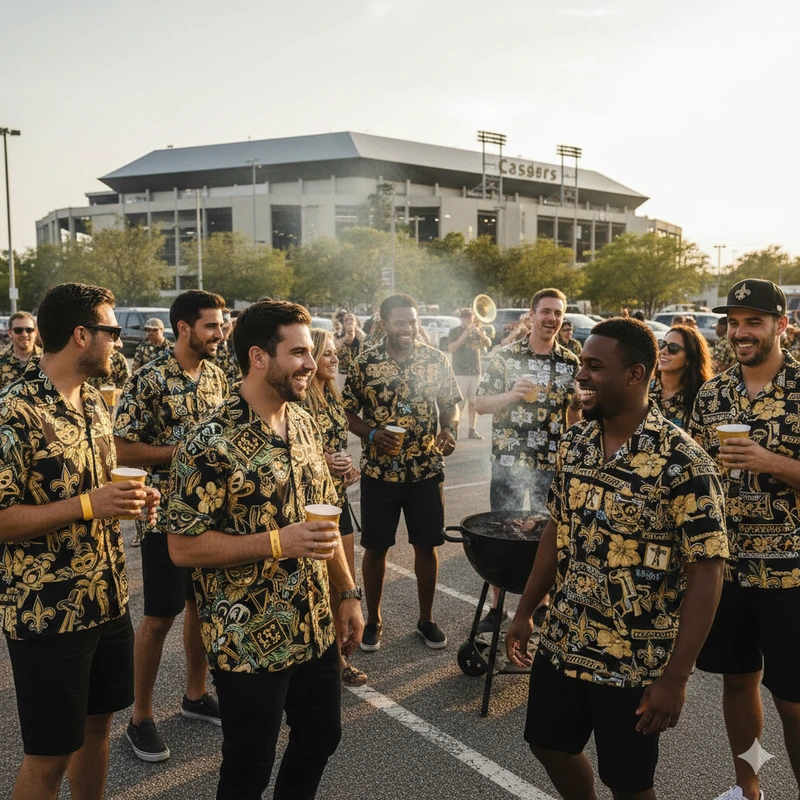
Saints fandom already looks like a parade. Costumes, beads, face paint, and oversized accessories are normal on gameday, not exceptions. Hawaiian patterns slide easily into this ecosystem because they share the same DNA as Mardi Gras—loud florals, layered symbolism, and joyful excess. Fleur-de-lis motifs translate especially well into tropical layouts, giving Saints gameday aesthetic a familiar but refreshed look. Instead of feeling out of place, these prints feel like an extension of New Orleans fan costumes, reinforcing the idea that Saints football is part performance, part celebration.
Beat the Dome Heat: The Practical Side of Saints Tropicals
Culture alone doesn’t explain the rise. Climate matters. Tailgating around the Caesars Superdome and outdoor watch parties across the city mean dealing with humidity that doesn’t let up. In 2026 conversations, fans increasingly point to breathable Saints apparel as a necessity, not a luxury. Saints Hawaiian shirts fit this reality. They’re associated with airflow, movement, and comfort during long afternoons that stretch into night games. That practicality helps explain why this look keeps resurfacing season after season in New Orleans tailgate style.
From NOLA to Paris: The 2026 International Influence
The Saints’ 2026 game at Stade de France has sparked a noticeable “jet-set” energy in the fanbase. Traveling Who Dat supporters are leaning into international-traveler style, where vacation-ready shirts double as cultural identifiers abroad. This moment has pushed Saints tropical looks into a new context—less regional, more global. It’s part of why the broader conversation around the New Orleans Saints Hawaiian Shirt hub has expanded beyond local tailgates into how fans represent the city on a world stage.
The “Tyler Shough” Effect: New Stars and Fresh Style
A new generation of players brings a new visual tone. Figures like Grand Marshal Tyler Shough and style-forward stars such as Chris Olave are associated with a modern, lifestyle-focused Saints identity. Fans mirror that shift, moving away from purely old-school merch toward pieces that feel current and wearable. This influence isn’t about copying athletes’ wardrobes. It’s about signaling that Saints fandom is evolving—confident enough to experiment while still rooted in tradition.
Future Outlook: The Rise of “NOLA-core”
Looking ahead, the crossover of vacation-core and team pride points to more year-round use of tropical prints. In New Orleans, Saints fandom doesn’t turn off in the offseason. From Jazz Fest to early September kickoffs, Hawaiian-style visuals fit seamlessly into the city’s calendar. “NOLA-core” captures this blend: relaxed but intentional, festive but grounded in identity. Saints Hawaiian shirts sit right at that intersection, making them feel less like a trend and more like a long-term expression of local culture.
Social Media and the “Fit Check” Revolution
Finally, visibility drives adoption. On TikTok and Instagram, black-and-gold tropical prints outperform standard jerseys in engagement because they stand out instantly on screen. Gameday fit checks thrive on contrast, pattern, and personality—qualities these shirts naturally deliver. As social platforms continue to shape how fandom is shared, Saints Hawaiian shirts benefit from being visually distinctive. They don’t just represent team loyalty; they tell a story in a single frame, which is exactly what modern fan culture rewards.
