Blog
Why Grateful Dead–Inspired Designs Feel So Natural in Modern NFL Fanwear
Mar
Over the past few seasons, a noticeable shift has taken place in stadiums, tailgates, and across social feeds: Grateful Dead–inspired designs feel completely at home in modern NFL fanwear. What once might have seemed like two separate worlds—psychedelic music culture and professional football—now blend seamlessly. This matters now because nostalgia cycles are peaking, fan identity is becoming more expressive, and game day has evolved into an immersive cultural event rather than just a three-hour contest. At its core, this crossover isn’t about novelty. It’s about alignment. The communal spirit, bold visuals, and improvisational ethos associated with the Grateful Dead mirror the energy of modern NFL fandom in surprisingly natural ways.
What Makes Grateful Dead–Inspired Design So Distinctive?
To understand why these visuals translate so well into football spaces, we first need to clarify what defines them. Grateful Dead–inspired design is recognizable not just because of specific symbols, but because of its atmosphere: vibrant color, fluid typography, and imagery rooted in movement, rhythm, and shared experience. Grateful Dead–inspired design refers to a psychedelic visual style characterized by bold, saturated color palettes, dancing skeleton motifs, improvisational artwork, and symbolism centered on community and freedom. It blends music, art, and identity into a cohesive aesthetic that celebrates collective experience. This isn’t minimal or muted. It’s expressive, layered, and intentionally eye-catching.
Core Visual Elements That Translate to Sports Culture
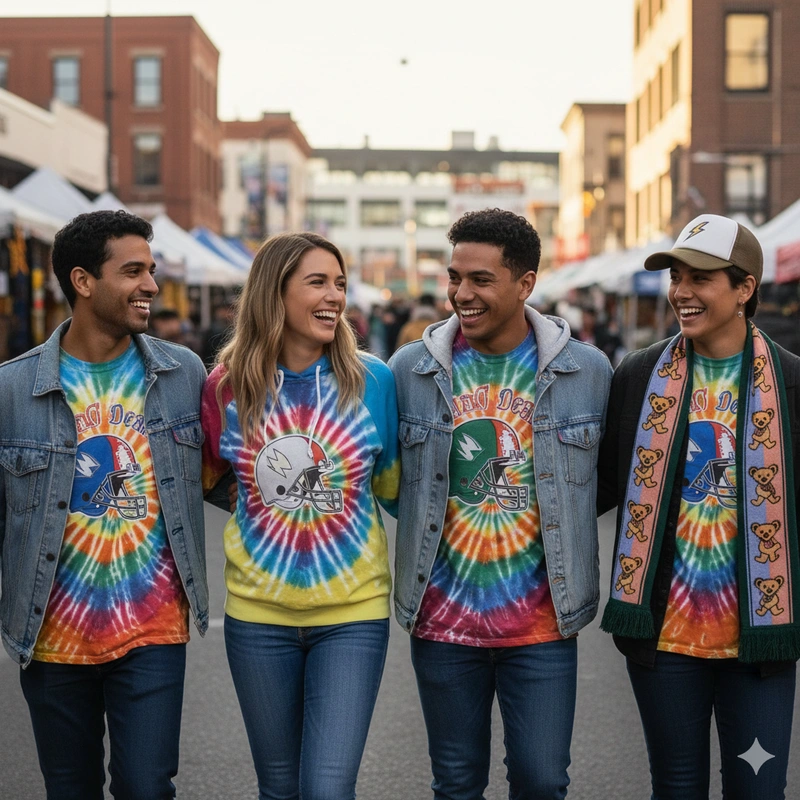
Bright palettes naturally align with NFL team colors. Retro-inspired typography complements throwback jerseys and alternate uniforms. Even the famous dancing skeleton motif echoes movement and rhythm—concepts that feel perfectly at home in high-energy stadium environments. Football culture is already loud and visually dynamic. Face paint, custom signs, themed tailgates, coordinated outfits—fans have always embraced bold expression. Grateful Dead–inspired graphics don’t disrupt that ecosystem; they amplify it. The result is a psychedelic sports aesthetic that feels additive rather than foreign.
Why Modern NFL Fanwear Is Already Primed for This Aesthetic
The real reason this crossover works is timing. Modern NFL fanwear has evolved far beyond static logos and predictable templates. Today’s fans want expression. They want to stand out while still belonging.
The Rise of Retro and Throwback Culture in the NFL
The NFL has leaned heavily into nostalgia in recent years. Throwback uniforms, vintage logos, and heritage-inspired storytelling have become central to the league’s visual strategy. This cultural backdrop makes retro-inspired, psychedelic visuals feel less experimental and more inevitable. When fans are already celebrating the past—revisiting old eras and embracing bold color blocking—jam band–influenced aesthetics slide in naturally. It’s part of a larger vintage football style resurgence that values authenticity and history.
Social Media and the Celebration of Bold Fan Identity
TikTok and Instagram have transformed how fans present themselves. Stadium “fit checks,” tailgate recaps, and fan outfit compilations reward individuality. Bold visuals perform well in social environments. Saturated colors, retro lettering, and layered symbolism are inherently camera-friendly. They spark conversation and community recognition. After establishing this cultural compatibility and visible momentum, it becomes easier to see how this broader movement has taken shape within football spaces—something explored more deeply in this topic: Grateful Dead x NFL: How Jam Band Culture Found a Home in Football Fandom
Community Energy: The Hidden Link Between Jam Bands and Football
The visual alignment is only part of the story. The deeper connection lies in community structure. Jam band culture revolves around collective experience. So does football.
Improvisation and the Drama of the Game
In jam band performances, no two shows are exactly alike. Songs stretch, evolve, and respond to the moment. Football mirrors that unpredictability. A carefully planned drive can unravel—or transform—within seconds. Fans don’t just watch outcomes; they ride emotional waves together. This shared embrace of uncertainty makes improvisational aesthetics feel conceptually aligned with the NFL’s dramatic rhythm. The unpredictability isn’t a flaw—it’s the point.
Tribal Symbols and Team Allegiance
Both music subcultures and sports communities rely on symbolism. Logos, colors, and recurring imagery function as visual shorthand for belonging. When expressive, psychedelic elements merge with team identity, they become layered symbols—signals that a fan isn’t just loyal, but creatively invested. In massive fan bases, identity signaling matters. It’s how individuals stand out while reinforcing collective allegiance.
Why This Feels Especially Relevant Right Now
Cultural timing is everything. The rise of Grateful Dead–inspired designs in NFL fanwear aligns with several broader shifts happening simultaneously. Post-pandemic, communal gatherings carry renewed emotional weight. Stadiums feel less routine and more intentional. Fans are seeking immersive experiences rather than passive entertainment.
Younger Fans Rewriting Game-Day Aesthetics
Gen Z and younger millennial fans approach fandom differently. They curate playlists for tailgates. They coordinate group visuals. They document their experience online. Hybrid identity is normal to them. Being both a diehard football supporter and deeply influenced by music culture isn’t contradictory—it’s cohesive. This generation embraces bold, expressive visuals that reflect multiple layers of personality. As a result, psychedelic aesthetics resonate naturally inside NFL environments.
Event-Based Momentum (Playoffs, Primetime, Festival Season Overlap)
Seasonal timing also plays a role. Playoff runs amplify emotional intensity. Primetime games turn stadiums into national stages. Summer festival culture overlaps with preseason hype and early-season optimism. When music festival aesthetics are already trending during warmer months, it’s no surprise that elements of that energy spill into football spaces. The overlap creates a cultural bridge that feels organic rather than orchestrated.
Cultural Expression Over Commerce: What This Shift Signals
The most important takeaway is this: the rise of Grateful Dead–inspired visuals in modern NFL fanwear reflects cultural expression, not transactional behavior. Fans aren’t simply changing what they wear. They’re redefining what game day represents.
Personal Narrative Through Team Aesthetics
For many supporters, fandom is layered. It’s tied to childhood memories, family traditions, favorite albums, and city pride. When psychedelic music symbolism merges with team allegiance, it becomes storytelling. It reflects the idea that identity isn’t singular. You can be a lifelong football fan and still carry deep attachment to music culture. That blending feels authentic because it mirrors real life.
The Future of Cross-Subculture Fanwear
Looking ahead, cross-subculture influence will likely become even more visible in stadiums. Music, art, street culture, and sports are no longer isolated spheres. Modern NFL fanwear increasingly acts as a canvas for layered identity. Expressive visuals rooted in music history don’t compete with team loyalty—they enrich it. As game day continues to evolve into a full cultural experience, the seamless fit between psychedelic design and football fandom makes perfect sense. It’s not a trend that feels forced. It feels natural—because it reflects how fans see themselves right now.
