Blog
Why Grateful Dead Culture Resonates Deeply With NFL Fan Communities
Mar
In recent seasons, a cultural crossover has become increasingly visible inside stadiums and across social feeds: elements of Grateful Dead culture aligning naturally with modern NFL fan communities. What once looked like two distinct worlds—psychedelic jam band followers and diehard football supporters—now share surprising common ground. This shift feels especially relevant now, fueled by nostalgia cycles, expressive fan aesthetics, playoff-season intensity, and the broader rise of hybrid identities shaped online. At its core, this conversation is not about merchandise. It’s about psychology, ritual, belonging, and how communities form around shared emotion. Grateful Dead culture resonates with NFL fan communities because both are rooted in collective identity, ritual gatherings, symbolic expression, and lifelong loyalty that extends beyond individual events.
What Defines Grateful Dead Culture?
To understand the resonance, it helps to define what Grateful Dead culture actually represents. Often associated with the devoted fan base of the Grateful Dead, this culture extends far beyond music. It’s about community, improvisation, visual symbolism, and a shared sense of belonging that travels from city to city. Grateful Dead culture refers to a community-driven music subculture centered on improvisational performances, symbolic art, traveling fan gatherings, and deep, multi-generational loyalty. Fans—often called Deadheads—prioritize collective experience, creative expression, and emotional connection over transactional participation. This definition matters because those same pillars define modern football fandom.
Core Cultural Traits That Extend Beyond Music
Loyalty is perhaps the strongest parallel. Deadheads follow tours across states. NFL fans travel to away games, defend their team through losing seasons, and carry traditions across generations. Ritual gatherings are another key trait. Concerts become reunions. Tailgates become annual pilgrimages. Shared symbols—whether dancing skeletons or team logos—act as shorthand for belonging. These cultural traits are portable. They transcend genre. And they map seamlessly onto football communities.
The Psychological Overlap Between Deadheads and NFL Fans
The emotional structure of jam band culture and NFL fandom is strikingly similar. Both rely on anticipation, unpredictability, and shared emotional release.
Ritual, Tradition, and Collective Identity
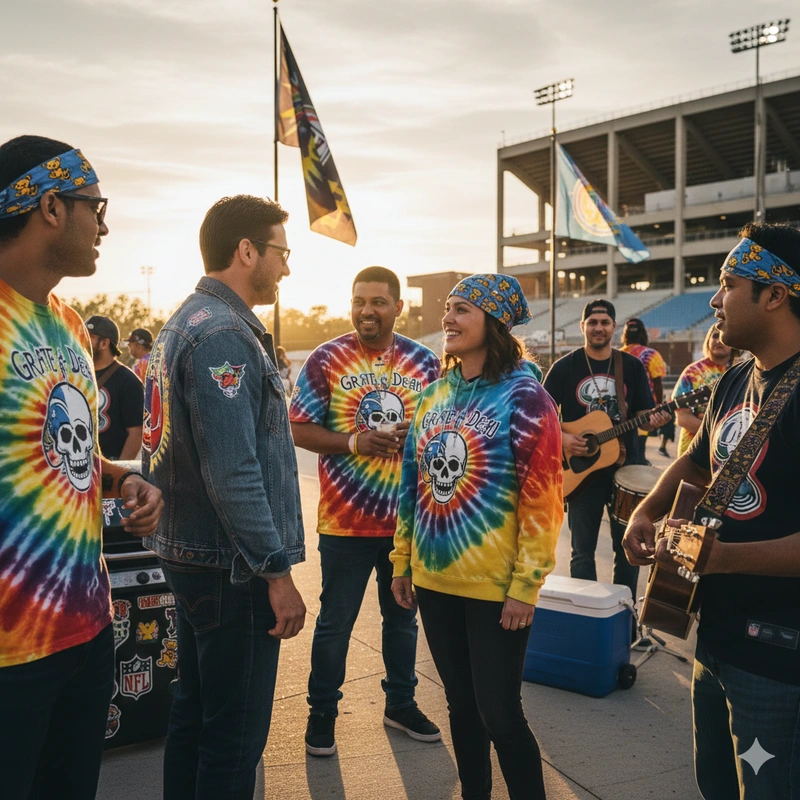
Concert tours and football seasons operate on cyclical rhythms. There’s buildup, peak moments, and collective memory-making. Tailgates mirror pre-show gatherings. Fans connect hours before kickoff, creating atmosphere through music, food, storytelling, and coordinated visual expression. The ritual itself becomes as meaningful as the main event. In both environments, identity is reinforced through repetition. Showing up matters.
Loyalty Across Seasons and Generations
Both communities value devotion that persists regardless of outcome. A disappointing season doesn’t dissolve team allegiance. A changing lineup doesn’t dissolve band loyalty. That emotional durability forms the backbone of fan culture. After recognizing these shared psychological foundations, it becomes easier to understand the broader cultural crossover explored in Grateful Dead x NFL: How Jam Band Culture Found a Home in Football Fandom topic, where music-inspired aesthetics and NFL identity intersect in visible ways.
Why This Cultural Alignment Is Gaining Momentum Now
While the parallels have existed for decades, their visibility is accelerating. We are currently in a nostalgia-driven cycle where retro aesthetics and heritage storytelling dominate sports culture. At the same time, social platforms amplify hybrid identities—fans proudly blending music influence, art references, and team allegiance.
Social Media as a Community Amplifier
TikTok, Instagram, and fan forums have transformed how communities express themselves. Visual storytelling travels instantly. When fans showcase expressive game-day style rooted in music symbolism, it sparks conversation. Others adopt, remix, and reinterpret the aesthetic. Momentum builds organically. This amplification makes cultural overlap feel larger and more unified than ever before.
Post-Pandemic Emphasis on Shared Experiences
There’s also a deeper emotional context. After years of disrupted gatherings, large-scale communal events feel newly meaningful. Stadium atmospheres carry renewed intensity. Fans aren’t just attending games—they’re reclaiming shared space. Grateful Dead culture’s emphasis on collective presence and experiential immersion aligns perfectly with this renewed hunger for connection. The result is a visible surge in community-first fandom.
Symbolism, Identity, and Expressive Fandom
Symbols anchor both music subcultures and sports communities. They act as visual declarations of loyalty and belonging. In NFL fan ecosystems that include millions of supporters, individuality still matters. Fans want to signal both allegiance and personality.
Visual Storytelling Through Team Allegiance
When music symbolism blends with team imagery, it becomes narrative. A fan isn’t just supporting a franchise—they’re expressing a layered identity that includes artistic influence and personal history. Apparel and visual choices in this context function as storytelling tools. They communicate shared values: freedom, loyalty, resilience, and community. This expressive fandom reflects how modern audiences see themselves—not as single-interest consumers, but as multi-dimensional participants.
Belonging in Massive Fan Ecosystems
Large fan bases can feel anonymous. Symbolic layers help create smaller tribes within larger communities. Shared references—whether musical or team-based—act as bridges. They spark conversations in parking lots and stadium concourses. They transform strangers into allies. Grateful Dead culture resonates deeply because it has always centered belonging. NFL fan communities, by design, thrive on that same principle.
What This Signals About the Future of NFL Fan Communities
Looking ahead, hybrid cultural identities will likely continue shaping the NFL experience. Music, art, and sport are no longer isolated spheres. They overlap in visual language, emotional expression, and community rituals.
Cross-Subculture Identity as the New Normal
Younger fans are comfortable blending influences. Supporting a football team while embracing jam band ethos doesn’t feel contradictory—it feels cohesive. As hybrid identities normalize, cross-subculture symbolism will become less surprising and more standard within stadium environments. The future of NFL fan culture may be defined not by uniformity, but by expressive diversity within shared allegiance.
Opportunities for Deeper Community Narratives
This evolution opens space for richer storytelling: festival-style tailgates, psychedelic sports aesthetics, music-inspired chants, and collaborative fan traditions. What matters most is not the visual overlap itself, but what it represents—a shift toward community-driven, emotionally layered fandom. Grateful Dead culture resonates with NFL fan communities because both prioritize connection over transaction, ritual over routine, and belonging over isolation. In an era defined by expressive identity and shared experiences, that resonance feels not just natural, but inevitable.
