
Blog
Why Fans Love the Betty Boop and Football Crossover Aesthetic
Mar
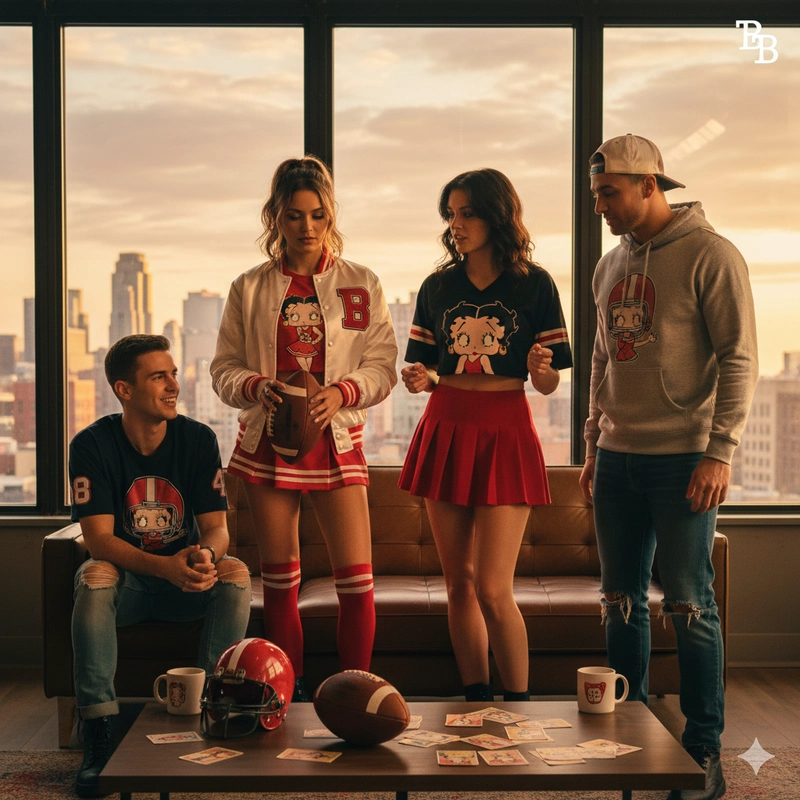
“Boop Core” wasn’t supposed to dominate football feeds — yet here we are. Over the past two seasons, vintage-meets-varsity visuals have gone viral across TikTok and Instagram, especially during playoff runs and rivalry weeks. Fans are pairing 1930s cartoon glam with modern gridiron energy, turning game day into a mood board moment. The Betty Boop football crossover aesthetic feels unexpected, nostalgic, and bold — exactly the kind of visual contrast that thrives in today’s algorithm-driven sports culture.
Defining the Betty Boop Football Trend
The Betty Boop football trend refers to the fusion of the iconic 1930s cartoon character’s retro, high-contrast femininity with football-inspired visuals, creating a vintage sports aesthetic that blends nostalgia with team identity. At its core, this crossover works because it combines two instantly recognizable symbols: classic animation and American football culture. The result is a distinctive look that stands out in stadium crowds and on social feeds alike. Unlike purely traditional fanwear, this aesthetic doesn’t just say “I support this team.” It says, “I understand the culture around this team — and I’m adding my own lens to it.”
The Appeal of Retro Femininity in a Masculine Space
Football has historically been framed as a masculine space. But modern fandom looks different. Women, fashion-forward fans, and digital creators are reshaping how game day is expressed visually. The rise of “coquette,” “soft girl,” and other femininity-forward subcultures has influenced sports styling. These aesthetics prioritize lace, bows, glossy hair, red lips, and nostalgic silhouettes — all elements that align surprisingly well with Betty Boop’s visual legacy. Bringing that energy into football spaces creates contrast. It challenges assumptions about what sports fan identity should look like. Rather than muting femininity to fit into stadium culture, fans are amplifying it. This shift feels timely. As conversations around inclusion and representation grow louder, expressive sports style becomes a form of cultural commentary.
Breaking the “Pink It and Shrink It” Stereotype
For years, women’s sports apparel was criticized for simply resizing or recoloring men’s designs — often defaulting to pink without deeper thought. The Betty Boop football aesthetic offers a different path. Instead of relying on surface-level color changes, it draws from subculture fashion and animation history. It feels intentional rather than token. Fans gravitate toward this crossover because it feels authentic. It doesn’t shrink fandom; it expands it. It allows supporters to maintain their aesthetic preferences while fully participating in sports culture. In this sense, expressive sports style becomes less about fitting in and more about standing out with purpose.
How Social Media Fueled the Crossover
Pinterest mood boards, TikTok “game day aesthetic” compilations, and Instagram playoff photo dumps have turned the Betty Boop football aesthetic into a recognizable visual language. On Pinterest, users build collages mixing varsity jackets, bold red palettes, vintage cartoon graphics, and stadium imagery. On TikTok, creators showcase outfit transitions from everyday looks into themed game day ensembles. The contrast between retro femininity and aggressive football branding creates high-impact content. As these visuals circulate, they normalize the pairing. What once seemed niche now feels familiar. For a broader exploration of how this crossover evolved and why it continues to gain cultural traction, see the deeper breakdown of the Betty Boop Football Merch. Understanding that wider context reinforces that this isn’t a random mashup — it’s part of a larger pop culture shift.
Identity Signaling: More Than Just a Graphic
Wearing a Betty Boop and football crossover look signals layered identity.
It communicates:
- Knowledge of vintage pop culture.
- Awareness of current social media aesthetics.
- Loyalty to a team.
- Comfort with blending softness and strength.
In modern sports fandom, clothing often acts as shorthand. A niche aesthetic tells other fans something about your personality. It suggests you engage with football as culture, not just competition. This kind of identity signaling is especially powerful online. In a scroll-heavy environment, distinctive visuals act as personal branding. The crossover becomes less about the character alone and more about what it represents: confidence, nostalgia, and individuality.
Seasonal Relevance and Future Momentum
The Betty Boop football aesthetic peaks during high-visibility moments: playoffs, championship games, rivalry weekends, and especially the Super Bowl. These events generate massive social conversation, encouraging fans to elevate their visual presence. Game day trends in 2026 are increasingly driven by shareability. Outfits that photograph well and spark comments gain traction quickly. The vintage sports aesthetic thrives in that environment because it is bold and instantly recognizable. At the same time, Betty Boop’s legacy as a 1930s animation icon gives the trend longevity. “Vintage” rarely feels outdated in fashion cycles — it resurfaces, reinterpreted for new generations. As long as nostalgia remains a cultural currency, this crossover is likely to reappear in waves rather than disappear entirely.
Summary of the Aesthetic’s Cultural Impact
The blend of 1930s animation and modern football culture works because it embodies contrast. Betty Boop represents glamour, flirtation, and retro charm. Football represents intensity, loyalty, and tradition. Together, they create tension — and tension is visually compelling. For today’s fans, especially those active on social media, the Betty Boop and football crossover aesthetic offers more than a graphic. It offers a way to participate in sports culture while preserving personal style. It turns game day into an opportunity for creative expression. In a fandom landscape shaped by identity, visibility, and digital storytelling, that combination makes perfect sense.
