
Blog
Why Country-Inspired Apparel Feels So Natural in Today’s NFL Fan Culture
Mar
NFL stadiums have become cultural crossroads. On Sundays, the sound of country music playlists blends seamlessly with crowd noise, tailgate rituals, and tunnel walk clips shared across social platforms. What once felt like two parallel worlds—country music and professional football—now overlaps into a single lifestyle signal rooted in blue-collar pride and community identity.
The Convergence of Country Music and Gridiron Grit
The NFL and country music crossover works because they speak the same cultural language. Both revolve around devotion—whether it’s following a team through losing seasons or sticking with an artist from small venues to sold-out stadiums. That shared DNA shows up in how fans dress, gather, and celebrate. Football fan lifestyle has always leaned communal and ritual-driven. Country music culture reinforces those same behaviors: tailgates, road trips, familiar anthems, and a sense of belonging tied to place. This is why country fans love football—and why the visual crossover feels organic rather than forced.
From Tailgates to TikTok: The “Coastal Cowboy” Influence
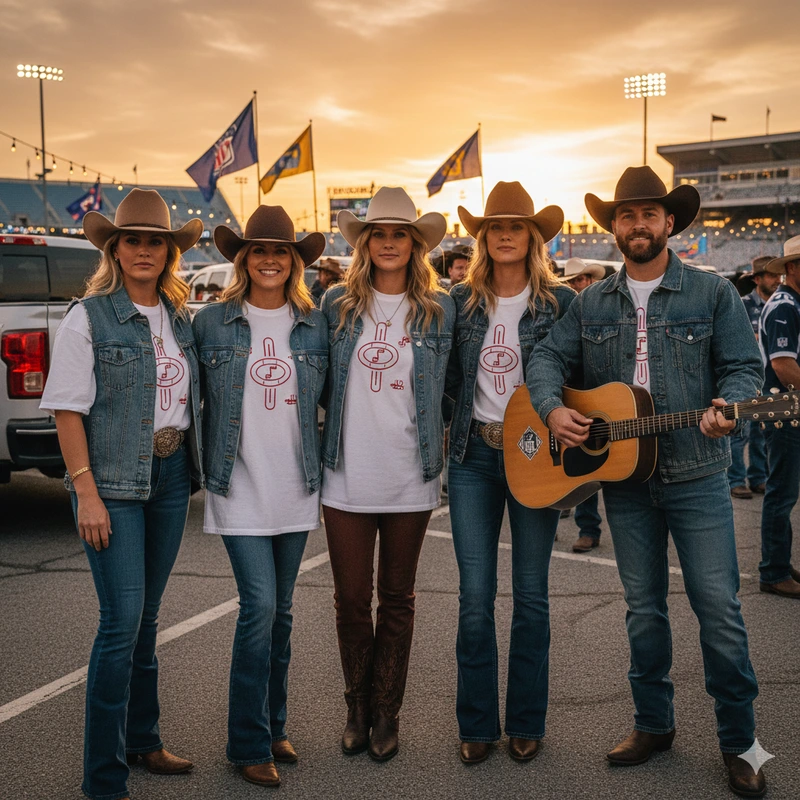
Recent fashion trends like “Coastal Cowboy” have pushed western elements into mainstream style feeds. Denim silhouettes, muted earth tones, and rugged textures are showing up in NFL stadium fashion trends, especially in fan fit-pics shared on TikTok and Instagram. What makes this moment different is visibility. Stadium tunnels double as content backdrops, and fans increasingly dress with the expectation of being photographed or filmed. Western-inspired fan gear works well in that context because it reads authentic, relaxed, and grounded—qualities that translate cleanly on social media.
The “Morgan Wallen Effect” on Sports Style
Modern country icons have accelerated this crossover by normalizing the blend of Nashville aesthetics and sports loyalty. Artists associated with stadium tours and game-day appearances have helped make country style feel at home in NFL environments. This cultural bridge has shaped how fans interpret the connection between music identity and team allegiance, a dynamic explored more deeply within the broader Morgan Wallen–NFL crossover narrative. The influence isn’t about merchandise—it’s about mood, posture, and shared cultural references.
Identity Signaling: Why Fans are Trading Jerseys for Graphic Tees
Fans today don’t want a single label. Many are moving beyond traditional jerseys toward NFL lifestyle apparel that reflects layered identities—sports fan, music listener, regional local. Graphic tees and western-inspired looks allow for that flexibility without abandoning team loyalty. This shift reflects broader identity signaling in sports fashion. Apparel becomes conversational, not uniformed. It tells a story about taste, background, and community rather than just scoreboard allegiance.
The Regional Connection: Small Towns and Sunday Nights
Country-themed designs resonate most strongly in NFL markets where football is woven into everyday life. Small towns, rural regions, and heartland communities often treat Sunday night games as social anchors, not just entertainment. Heartland football culture values familiarity and continuity. Country aesthetics align with those values, reinforcing regional sports identity in a way that feels earned rather than styled for trend cycles.
Future Cluster Topic: The Evolution of Collegiate Country Style
This crossover doesn’t stop on Sundays. College football country style is increasingly visible across SEC tailgate fashion, where music, school pride, and regional identity intersect. The same visual language shaping NFL fandom is already defining Saturdays.
Why This Aesthetic is Dominating the Post-Season
Post-season football intensifies everything—weather, emotion, and symbolism. Country-inspired looks fit naturally into winter NFL fashion because they emphasize layering, durability, and restraint over spectacle. As playoff atmospheres grow heavier and colder, fans gravitate toward styles that feel grounded and resilient. The aesthetic matches the moment, reinforcing why this crossover isn’t a phase, but a reflection of how NFL fan culture looks right now.
