
Blog
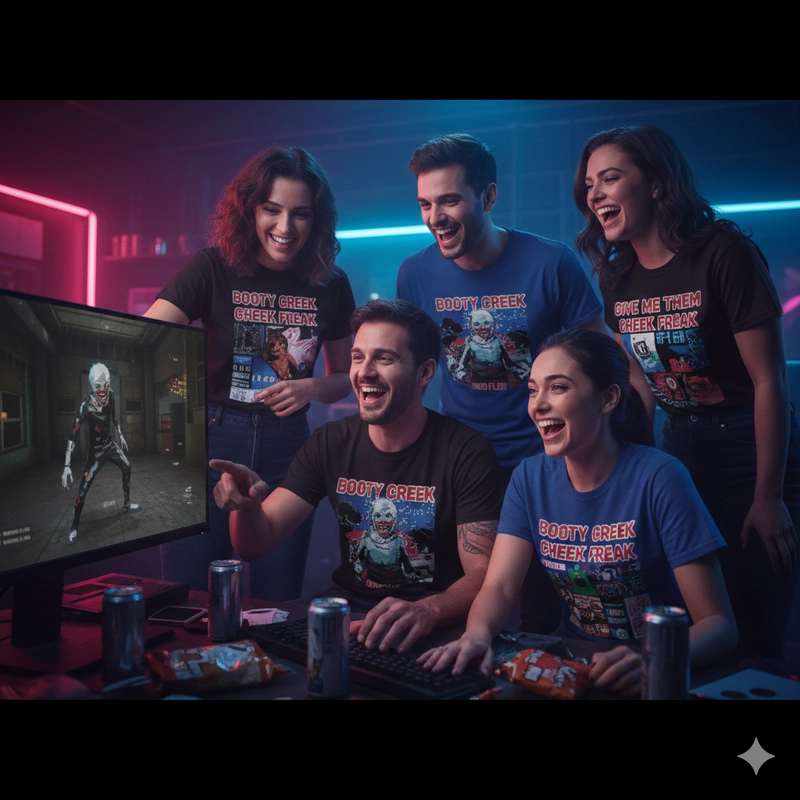
How Booty Creek Cheek Freak Shirts Show Up in Gameplay
Feb
The Booty Creek Cheek Freak (BCCF) has become one of those rare indie horror moments where a game jumps off the screen and into real-world fan culture. What started as a lo-fi Puppet Combo experience quickly merged with creator-led gameplay, especially through reaction-heavy streams. Today, the character shows up across clips, memes, and event photos as a visual shorthand for a very specific kind of chaotic gaming humor embraced by fans of CaseOh, Kubz Scouts, and the wider retro-horror crowd.
What is the Booty Creek Cheek Freak Meme?
At its core, the Booty Creek Cheek Freak meme comes from the game’s antagonist and the intentionally over-the-top dialogue that accompanies encounters. The phrase associated with the character became shareable because it was unexpected, awkward, and delivered within a PS1-style horror framework that already feels uncanny. For many players, the joke isn’t about shock value alone. It’s about contrast. A low-resolution slasher setup collides with absurd humor, creating moments that feel instantly clip-worthy. That contrast is why searches around the cheek freak game origin and Puppet Combo memes spiked almost overnight.
From Streamer VODs to IRL: The Rise of the “Freak” Aesthetic
Streamer culture played a major role in pushing BCCF beyond gameplay. CaseOh’s reactions, in particular, turned tense moments into communal jokes, with chat repeating lines and remixing screenshots across social platforms. Once those moments escaped VODs, the character’s look became recognizable even to people who hadn’t played the game. Within the “chronically online” gaming community, that recognition matters. Wearing or referencing the Freak aesthetic signals familiarity with a very specific corner of indie horror—one defined by irony, exaggerated fear, and shared laughter at the absurd.
Signaling “Deep Lore” in the Horror Gaming Community
Among fans of developers like Jordan King and Puppet Combo, BCCF functions as deep lore. It’s not mainstream horror branding; it’s an inside reference. Spotting it in the wild tells others that you’ve watched the streams, followed the discourse, and understand the tone of this subgenre. This is similar to how Torture Star Video fans recognize each other through niche references rather than big franchise logos. The value is in being “in on it.”
How Gameplay Mechanics Influence Shirt Design Elements
The visual language tied to BCCF mirrors the game’s mechanics and atmosphere. Harsh lighting, muddy textures, and exaggerated character silhouettes reflect the UI and environmental design. Even the intentionally awkward costuming pulls from slasher-film parody rather than realism. Fans often point out how these visuals translate cleanly from gameplay to graphic form, preserving the same off-kilter energy seen on screen. This connection between mechanics and imagery is a big reason the style resonates within discussions around the Booty Creek Cheek Freak Shirt, where context matters more than polish.
Why BCCF Style is Dominating Gaming Conventions and Meetups
At conventions and local meetups, BCCF visuals stand out because they reject safe, mainstream references. Fans use them to signal a taste for “weird,” out-of-pocket indie games that thrive on discomfort and humor rather than high-budget spectacle. This shift reflects a broader trend in 2026 gaming culture: moving away from AAA uniformity and toward niche identity markers. BCCF fits perfectly into that moment because it’s instantly recognizable to the right audience and confusing to everyone else.
The “Ironic Slasher” Trend in 2026 Streetwear
BCCF also slots into the growing “ironic horror” trend, where exaggerated slasher elements are embraced as camp. The character’s absurdity is the point. Fans aren’t celebrating fear; they’re celebrating the shared joke and the aesthetic confidence that comes with it. This approach aligns with other internet-driven fashion moments where sincerity and irony blur, especially among younger gaming communities.
The Future of Puppet Combo Inspired Fan Projects
Looking ahead, anticipation around the sequel, often referred to as “The De-Cheekening,” is already shaping fan conversation. New mechanics and environments are expected to introduce fresh moments ripe for remixing, clipping, and reinterpretation. If the first game showed how quickly gameplay can spill into culture, the sequel will likely accelerate that cycle. For the indie horror scene, BCCF has become a template for how community-driven humor fuels the next wave of creative fan expression.
