
Blog
From Cartoon Icon to Sideline Trend: The Rise of Betty Boop in Football Fashion
Mar
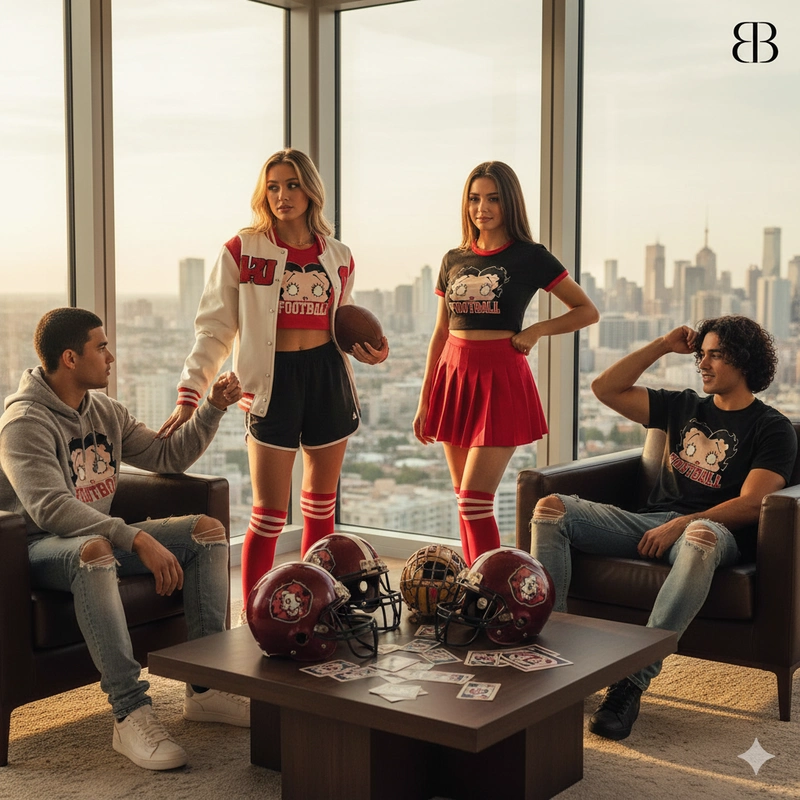
The collision of 1930s animation and modern stadium culture might seem unlikely at first glance. Yet “vintage fusion” is dominating game day feeds, especially during playoff season and high-stakes matchups. Scroll through TikTok or Instagram on a Sunday, and you’ll see a wave of retro cartoon energy layered over varsity silhouettes and bold team colors. The Betty Boop football trend has moved from niche aesthetic experiment to recognizable sideline statement.
Why Betty Boop Became a Modern Football Symbol
The Betty Boop football trend is the fusion of a 1930s Americana cartoon icon with contemporary football styling, creating a vintage sports aesthetic that blends nostalgia, femininity, and team loyalty into a distinct modern fan identity. So why is Betty Boop popular in football culture right now? First, she represents classic American imagery. Football is often framed as a pillar of Americana, and pairing it with an equally iconic figure from early animation history creates cultural symmetry. Second, her bold visual identity translates perfectly to today’s content-driven sports culture. High-contrast graphics, red-and-black palettes, and expressive facial features stand out in stadium photos and short-form video. Finally, fans are looking for alternatives to predictable game day visuals. The Betty Boop football crossover offers familiarity with a twist — recognizable yet unconventional.
The “Y2K-Meets-Varsity” Aesthetic on Social Media
Gen Z and Millennial fans have been central to pushing this crossover into the mainstream. On TikTok, “game day aesthetic” videos often feature layered varsity jackets, oversized silhouettes, glossy hair, and vintage-inspired graphics. On Pinterest, mood boards labeled “coquette football outfits” mix bows, red lips, and sporty elements in a way that feels intentionally curated. This Y2K-meets-varsity formula works because it blends softness with edge. Betty Boop’s retro glamour pairs seamlessly with athletic shapes and stadium-ready styling. The contrast is visually compelling, and contrast performs well online. More importantly, this aesthetic allows fans to signal that they are both fashion-aware and sports-engaged. It bridges subculture style and mainstream fandom.
Impact of Nostalgia on Sports Fan Culture
Nostalgia has become a powerful driver in sports fashion. As corporate logos and standardized designs dominate official visuals, fans increasingly gravitate toward character-based imagery that feels more emotional. Betty Boop represents a time capsule — an era of black-and-white animation, jazz-age glamour, and bold femininity. When merged with football culture, that nostalgia softens the hyper-commercial tone of modern sports branding. Character-driven sports imagery taps into emotive fandom. It’s less about displaying a logo and more about expressing a feeling. That shift explains why nostalgic sports culture continues to gain traction across digital communities.
Signaling Fandom Through Iconic Character Mashups
In 2026, football fashion trends are about personalization. Fans want to stand out without abandoning team loyalty. The Betty Boop football crossover allows supporters to signal dual belonging: they are both culturally fluent and team devoted. Instead of relying solely on traditional jerseys, they reinterpret game day through character symbolism. This form of identity signaling matters in social media environments where visual distinctiveness drives engagement. A character mashup becomes shorthand for individuality. For a deeper exploration of how this crossover evolved into a recognizable movement within sports culture, see the broader breakdown here:
Betty Boop Football Merch: Graphic Shirts, Game Day Styles & Fan Favorites
That larger context shows how Betty Boop’s transition from cartoon icon to football fashion symbol reflects wider changes in how fans express allegiance.
How the Trend Mirrors Current Streetwear Movements
The rise of Betty Boop in football fashion aligns closely with broader streetwear shifts. Oversized silhouettes, high-contrast graphics, and bold statement imagery have dominated urban style scenes in major cities. Graphic-heavy looks, especially those rooted in nostalgia, are now considered mainstream rather than fringe. Modern sideline fashion increasingly mirrors streetwear. Stadium entrances resemble runway walks, with fans treating pre-game moments as style showcases. The Betty Boop aesthetic fits seamlessly into this environment because it is graphic-forward and unapologetically expressive. Rather than feeling out of place, the crossover feels like a natural extension of sports streetwear culture.
What This Crossover Means for the Future of Stadium Style
The popularity of this trend suggests that stadium style is moving away from uniformity and toward niche sports aesthetics. Fans are no longer satisfied with generic expressions of loyalty. They want layers — cultural references, subculture influences, and personal storytelling. Character-sports mashups fulfill that need. As long as nostalgia remains cyclical and digital platforms reward visual creativity, the Betty Boop football aesthetic will continue to resurface in new forms. It may evolve — blending with other animation icons or intersecting with new micro-trends — but the underlying principle will remain: fandom as identity. From cartoon icon to sideline trend, Betty Boop’s presence in football fashion reflects a broader shift. Game day is no longer just about the scoreboard. It’s about self-expression, cultural fluency, and the confidence to redefine what modern fan gear can represent.
