
Blog
Booty Creek Cheek Freak Shirt Designs and Game Graphics
The indie horror game The Booty Creek Cheek Freak sits in a strange, memorable corner of internet culture. Built on low-fi visuals and absurd slasher parody, the game’s aesthetic traveled fast—from a niche Patreon project tied to Puppet Combo’s horror lineage to a recognizable visual language shared across horror forums, memes, and fan creations. What emerged wasn’t just appreciation for the game itself, but a shared set of symbols that fans immediately recognize. At its core: Booty Creek Cheek Freak shirt designs and game graphics reflect the lo-fi horror aesthetic—grainy visuals, ironic parody, and PS1-era design—that fans use as cultural signals within indie horror communities.
The “Lo-Fi Horror” Aesthetic: Why Graphics Matter
The Puppet Combo art style is defined by deliberate roughness. VHS-style filters, low-polygon character models, muddy lighting, and visual noise mimic the look of late-90s survival horror and found-footage tapes. In Booty Creek Cheek Freak, this aesthetic is pushed even further by exaggeration and humor. These visuals matter because they set the tone. The grit makes the game feel unsettling, while the absurd character design undercuts that fear with irony. For the community, those graphic choices become the foundation of how the game is referenced, remembered, and visually remixed.
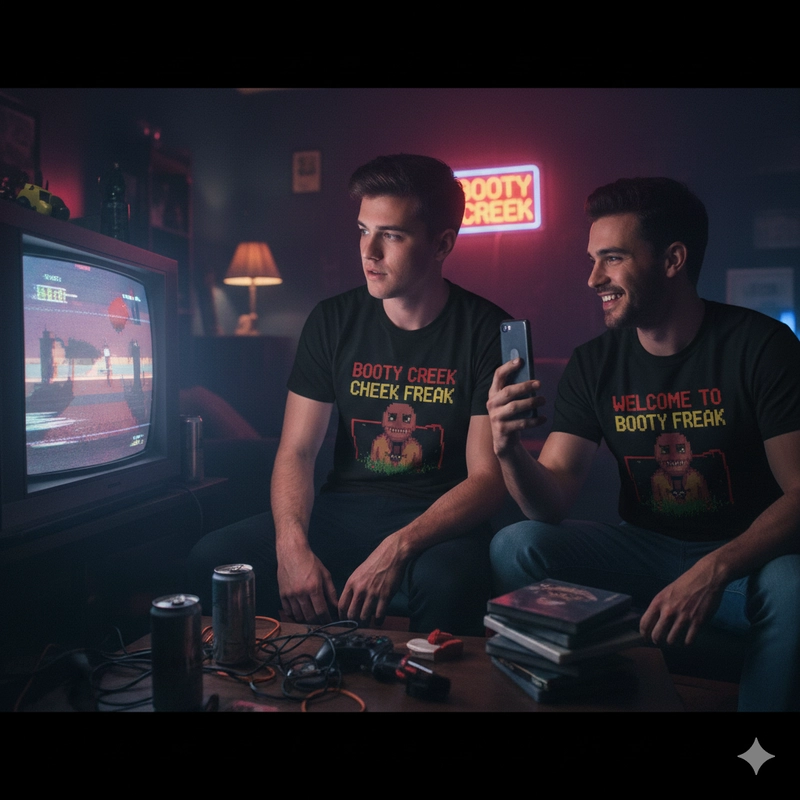
Translating Slasher Parody into Identity Signaling
The “Cheek Freak” character works because it’s instantly recognizable and intentionally ridiculous. Among indie horror fans, referencing it functions as an “if you know, you know” signal—less about being scary and more about sharing a specific sense of humor. This marks a shift away from traditional horror imagery. Instead of hyper-realistic monsters or gore, fans gravitate toward parody-driven visuals that acknowledge the genre while poking fun at it. The identity signaling isn’t about fear; it’s about taste, irony, and familiarity with niche horror culture.
From Pixelated Horror to Wearable Art
Elements like the Booty Creek logo, campground signs, and environmental textures have taken on a second life outside the game. Stripped of context, they still carry meaning for those who recognize them, functioning as cultural markers within both gamer and maker communities. This translation from screen to shared visual language explains why the broader Booty Creek Cheek Freak Shirt resonates beyond the game itself. The graphics aren’t just assets—they’re symbols that fans reuse to express belonging to a specific corner of retro-horror culture.
The Role of Social Media in the “Cheek Freak” Phenomenon
Social platforms accelerated the spread of these visuals. Let’s Plays and reaction videos on YouTube, including coverage by creators like the Kubz Scouts, introduced the game to audiences who might never have discovered it otherwise. On TikTok, short clips and screenshots turned pixelated moments into looping jokes and recognizable memes. This kind of visibility transformed obscure graphics into shared reference points. Fans didn’t just watch the game—they repeated it, remixed it, and turned its imagery into shorthand for a certain type of horror humor that thrives online right now.
Future Directions: The Evolution of “Niche Gaming” Style
The popularity of Booty Creek Cheek Freak’s aesthetic points toward a broader trend in gaming culture: an embrace of unpolished, ironic, and intentionally strange visuals. As mainstream gaming leans toward realism, niche communities are doubling down on styles that feel handmade, chaotic, and self-aware. For indie horror fans, this evolution reinforces the idea that style doesn’t need to be clean or serious to be meaningful. Instead, the future of niche gaming style looks increasingly defined by bold parody, retro distortion, and visuals that signal community first—polish second.
